The basics
How non-surgical spinal decompression works
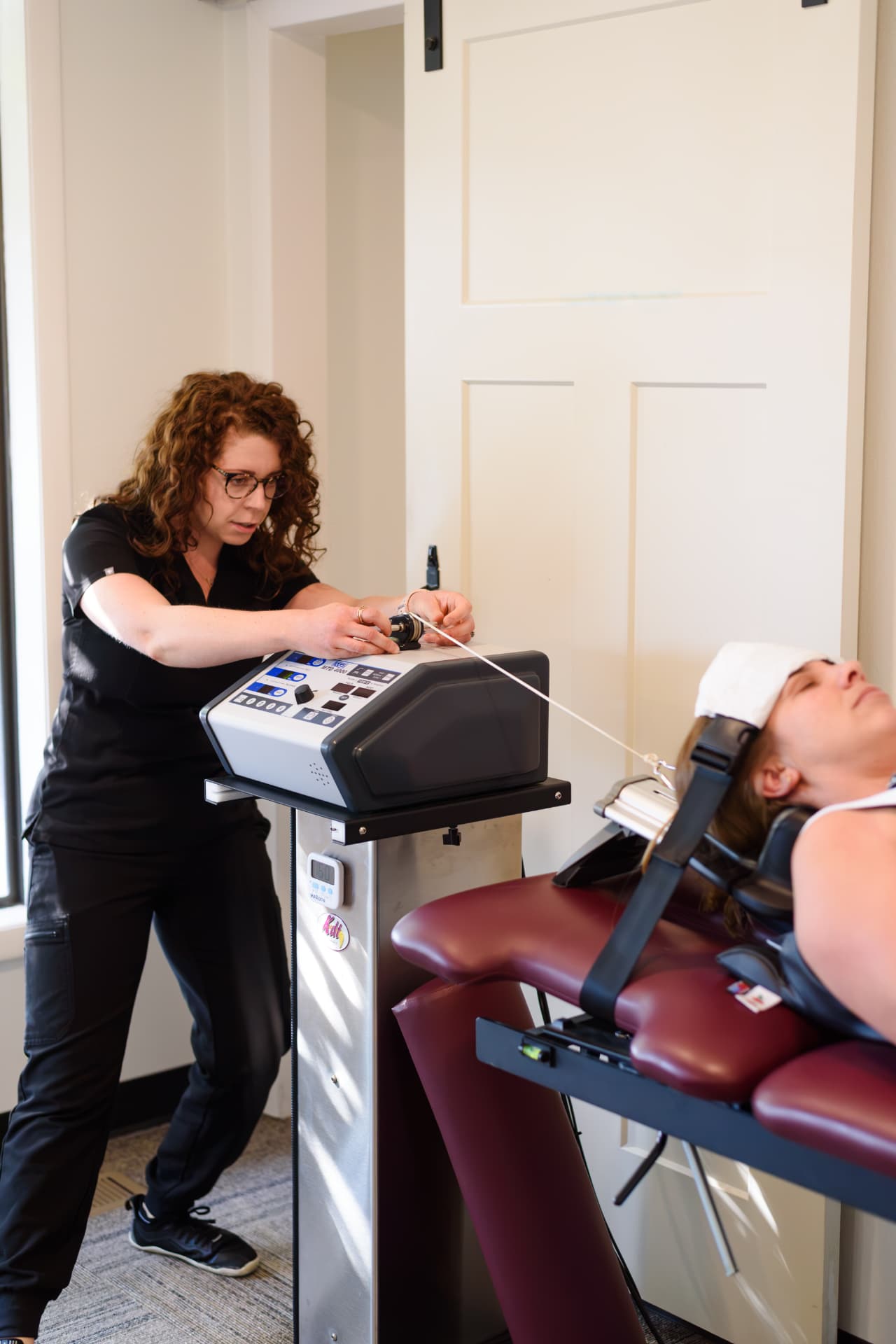
Decompression is motorized, computer-controlled traction applied in cycles. The goal is to unload a specific spinal segment long enough for an irritated disc and nerve root to calm down.
- 01
Exam and imaging review
Your provider reviews history, orthopedic and neurological testing, and any MRI or X-ray to confirm a disc-related pain generator and rule out contraindications.
- 02
Positioning on the table
You stay clothed and lie face-up or face-down. A padded harness fits around the pelvis and trunk for lumbar work, or a cradle supports the head for cervical work.
- 03
The pull-and-release cycle
The computer applies a slow, ramped tension for roughly a minute, then eases off. That cycling avoids triggering the guarding reflex that a constant hard pull would cause.
- 04
Negative pressure inside the disc
Distracting the vertebrae is thought to lower pressure within the disc, encouraging fluid, oxygen and nutrients to move in and reducing pressure on the nerve root.
- 05
Supporting care
Sessions are usually paired with adjustments, soft-tissue work, cold therapy or core stabilization so the segment holds its improvement between visits.
- 06
Reassessment
Progress is re-measured through the plan. If symptoms aren't changing, the plan changes — that may mean referral for imaging or a specialist opinion.
Decompression vs. other traction
Inversion tables
Hanging upside down applies whole-body gravity traction with no control over force, angle or which segment is targeted, and it raises blood pressure and eye pressure. Decompression targets one level at a measured force.
Manual traction
Effective but limited by how long a clinician can sustain a pull. Motorized systems hold a precise load for a full 15–20 minute protocol.
Chiropractic adjustment
Adjustments restore joint motion; decompression addresses disc load. Most plans use both, because a mobile joint holds a decompressed disc better.
Find out if you're a candidate for decompression
Elevation Spine Center offers a consultation and exam in Bend to review your imaging, symptoms and history before any table time is scheduled.