What an inversion table actually does
Inversion hangs you by the ankles at an angle, using gravity to stretch the whole spine at once. The force is unmeasured, applied to every segment equally, and gated by your own muscle guarding — most people's back muscles tense against the stretch, which cancels much of the disc-level unloading.
For general stiffness or a mild ache, that global stretch can feel good. For a specific L5 herniation pressing on a nerve root, it's the difference between stretching a whole garden hose and fixing a kink at one point.
What clinical decompression does differently
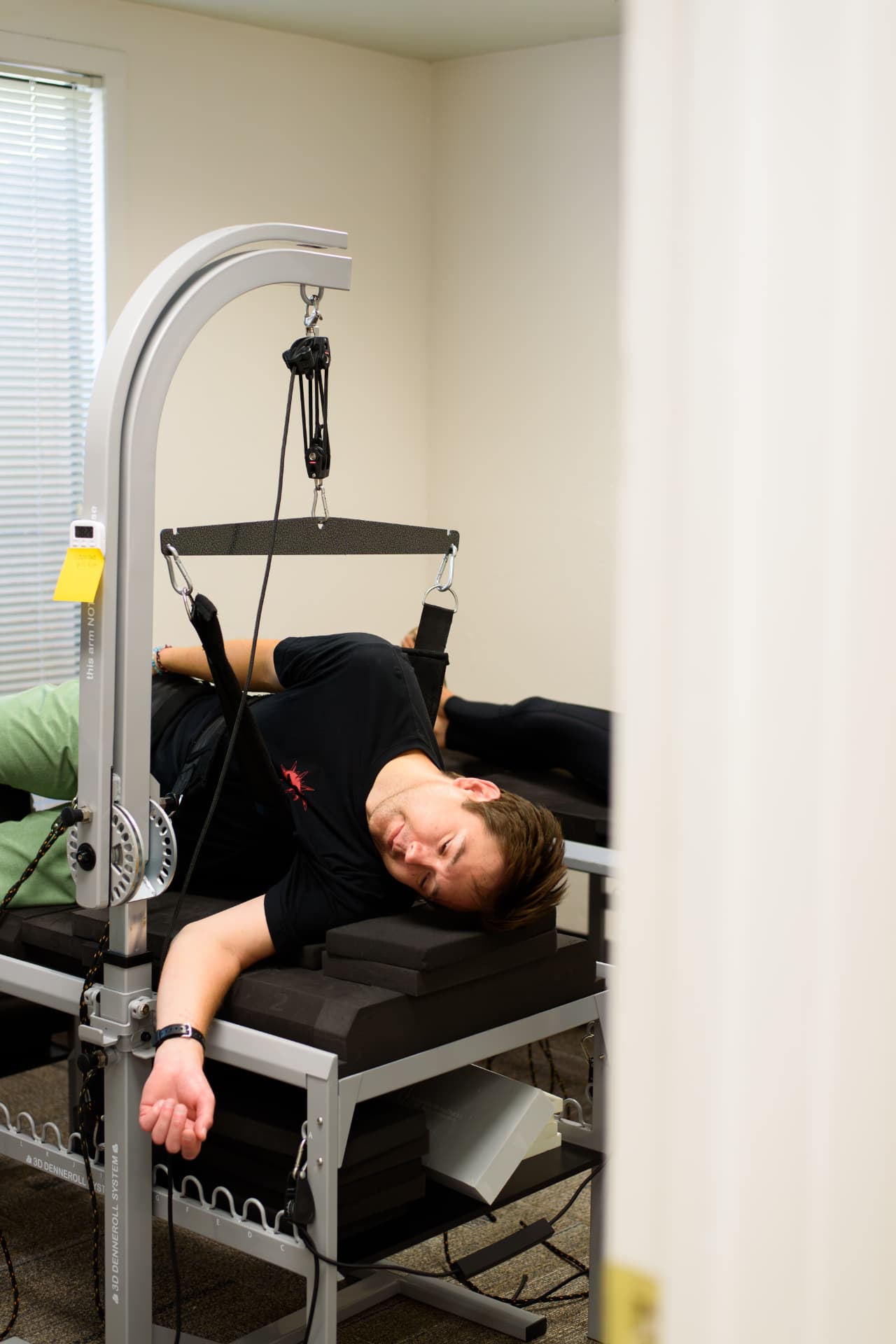
- Targets one spinal region (lumbar or cervical) with a harness system
- Applies a measured, computer-controlled force calibrated to your body
- Cycles pull and release to prevent the muscle guarding that resists static traction
- Adjusts the angle of pull to bias the injured disc level
- Is preceded by an exam that screens out people traction could harm
Safety differences worth knowing
Inversion raises blood pressure and eye pressure and loads the ankles and knees — it's a poor idea with uncontrolled hypertension, glaucoma, reflux or significant osteoporosis, and there's no professional checking. Clinical decompression keeps you horizontal (no blood-pressure spike), uses a fraction of body weight, and starts with a screening exam.
A sensible way to think about it
If you're young, stiff, and imaging shows nothing serious, an inversion table is a reasonable thing to try carefully. If you have a diagnosed herniation, radiating pain, or numbness, the precision and screening of clinical decompression is what you're actually paying for — and it's the version a clinician would point their own family toward.
Common questions
Can an inversion table fix a herniated disc?
There's no good evidence it can. The unmeasured, whole-spine stretch of inversion doesn't reproduce the targeted, cyclic unloading shown to reduce intradiscal pressure in clinical decompression.
Is inversion dangerous?
For healthy people, used briefly and moderately, usually not. It is risky with high blood pressure, glaucoma, heart conditions, pregnancy and significant osteoporosis — and hanging fully inverted is never necessary to get any benefit it offers.
Can I do both?
Ask at your consult. Gentle inversion is sometimes fine alongside a decompression plan, but during active treatment the clinic may prefer you avoid uncontrolled traction so the response to the plan can be judged cleanly.